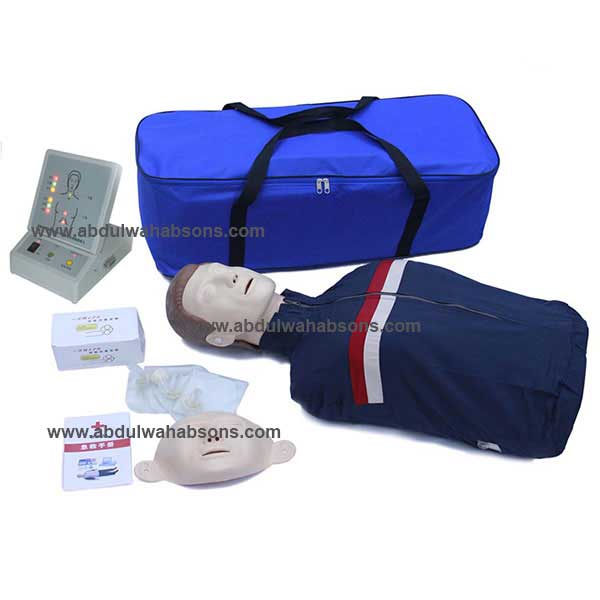
CPARLENE® is flexible and adaptable; it was designed with modular components that require no conversion kits. Individual student face masks provide maximum protection from cross contamination. The disposable face mask is designed with a one-way non-rebreathing valve. Molded hair requires no maintenance. Disposable tracheal airway and lower airway with lung bag eliminates time consuming disinfection procedures. Every CPARLENE® manikin carries the Life/form®
Quality Features of CPARLENE®:
• Available in light or dark (torso only)
• Fully articulated head, neck, and jaw
• Non-rebreathing Airway System
• Sanitary Molded Hair
• Adult and Child CPR versions
• Life/form®
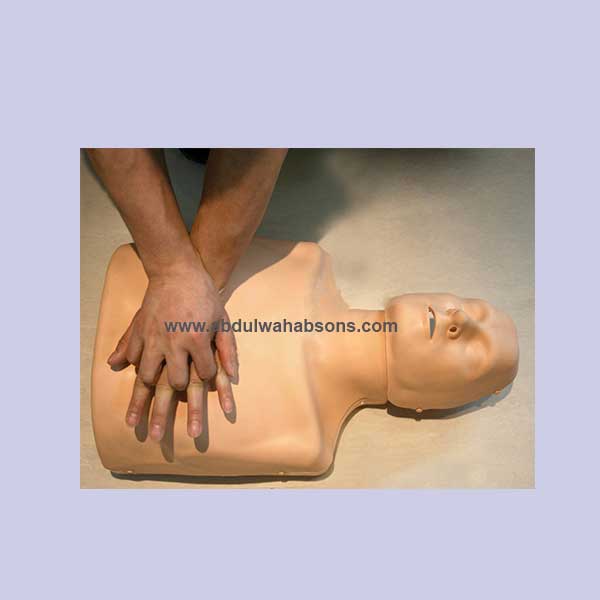
CPR Training Capabilities with CPARLENE®:
• Jaw Thrust
• Pliable abdomen for obstructed airway procedure
• Manual Carotid Pulse
• Xiphoid, navel, nipples, and ribcage land marks
• Constricted and Dilated Eye
• Electronic Monitoring Options
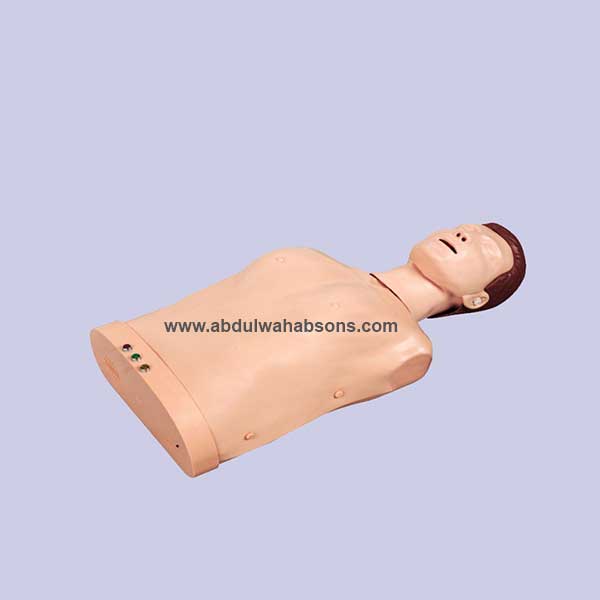
Basic CPARLENE® Torso includes basic adult torso, short sleeve jacket, sanitary face mask, disposable lower airway, disposable tracheal airway, and white fitting.
The only available teaching model which permits the practice of placing Peripherally Inserted Central Catheter Lines (PICC Lines). The rapid acceptance and use of PICC Lines creates a need to be able to properly teach this procedure. Peter PICC Line™ allows both the teaching and assessment of this insertion technique. This portable teaching model has translucent arm skin that allows the visualization of the anatomically correct cephalic, basilic, and median basilic veins. The axillary jugular, subclavian, and superior vena cava veins are also present, plus a movable chin simulates the occlusion of the jugular to prevent the PICC Line from taking this path. Palpable ribs permit practice in measuring proper catheter length to the correct intercostal space. The model also permits the measurement of catheter length outside of the body and the confirmation of proper placement by viewing the distal tip of the catheter in the viewable superior vena cava. Replaceable, barely translucent arm skin allows visualization of underlying veins. Includes soft carrying case. A great tool for training and skill assessment. Blue veins are made of natural latex. Measures 17″ x 22″ x 5-1.2″.
Realism in pediatric training that is also affordable. STAT Baby brings you the most lifelike simulator for infant care by utilizing new material for tactile awareness during assessment. Developed in conjunction with leading pediatric physician involvement, this baby contains a wide range of skill sets in a simple format. The infant is sized to a 9-months-old and weighs 18 lbs. The size, heft, and feel of this child stirs the emotions when you pick it up.
Features:
Bilateral chest tube insertion
Defibrillation with shock level of 2-4 joules per kg
ET Tube insertion
Feeding tube care
Foley catheter insertion (female)
Intramuscular and subcutaneous injection sites
Intraosseous leg
LMA insertion
NG tube placement with fluid reservoir
Peripheral IV sites on hand foot
PICC line
Pneumothorax
Rectal medication
Six pulse locations
Tongue edema and laryngospasm
Trachea care
The STAT Baby is supplied with accessories that include IV vein kit ( one arm and one leg ) leg skin, arm skin, 121/0 leg bones, four pneumothorax sites, two injection sites, one PICC line site, four bags, defibrillator adapter, interactive ECG simulator, simulated blood powder, and carry bag. Wt.28lbs.
Portable and easy-to-use manikin for teaching and learning heart, breath, and bowel sounds. Although used in many simulation centers, the manikin is also easily moved into a classroom or auditorium for group instruction. The computer software interface is easily projected into any smart classroom. The software includes phonocardiograms, correct anatomical locations, and written lessons for each sound. Features include: • Carotid pulse • Customized volume adjustments • Large library of sounds includes 35 heart, 21 breath, 16 bowel, and four carotid bruit sounds, all heard at the correct anatomical location (both anterior and posterior), along with 16 heart/breath combination sounds • Pediatric sounds – includes ASD, PDA, VSD, pulmonary hypertension, pulmonary stenosis, and Tetralogy of Fallot • Phonocardiogram • Portability – lightweight manikin weighs only 23 lbs. • Preprogram your own password-protected lectures and scenarios • Smart classroom/auditorium ready • Students use their own stethoscope • Variable breath sounds • Variable heart and respiration rates Includes male manikin, Dell laptop computer with SAM II software installed, 196-page lesson guide, and operator’s manual. Shipped directly from our supplier. Allow extra delivery time.
Abdul Wahab & Sons provides advanced scientific and medical education solutions, including VR/AR, holograms, 3D Anatomy Tables, and PowerLab systems. AWS serve hospitals, research labs, medical schools, and universities with precision instruments, skill labs, and immersive learning tools empowering the future of healthcare and science.



Reviews
There are no reviews yet.