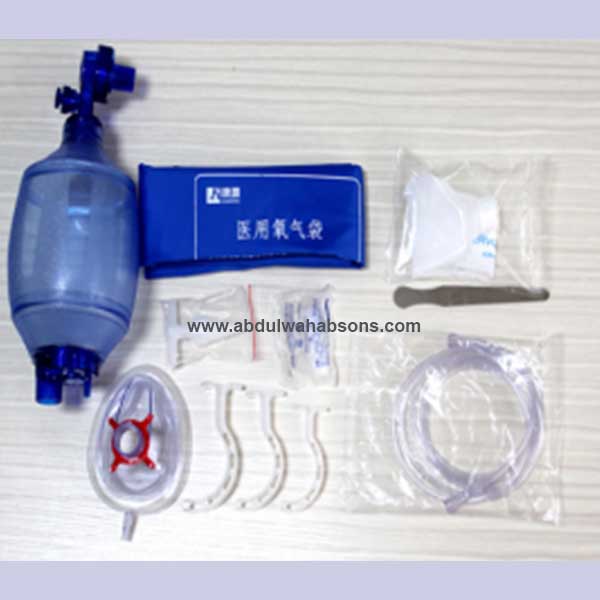
Textured PVC bag for sure grip and comfort. Clear, flexible PVC cushion face mask ensures tight seal. Non-rebreathing valve directs exhaled gas away from care giver. Includes medication/manometer port for use with MDI or syringe, an integrated PEEP connection, and a swivel patient connection. Collapsible. Latex-free. Meets ASTM and ISO standards.
A life-size human torso with interchangeable male and female genital organs with embryo in third month of pregnancy. Dissectible into 24 parts: head, half brain with arteries, eye with optic nerve, female breast cover, two lung halves, heart (2 parts), stomach (2 parts), liver with gallbladder, large intestine with appendix flap (3 parts), small intestine, kidney half, female genital organs (2 parts) with third month embryo, male genital organs (4 parts), and torso. Unbreakable plastic. 15″ x 10″ x 34″ mounted on base. Torso teaching guide included
Realism in pediatric training that is also affordable. STAT Baby brings you the most lifelike simulator for infant care by utilizing new material for tactile awareness during assessment. Developed in conjunction with leading pediatric physician involvement, this baby contains a wide range of skill sets in a simple format. The infant is sized to a 9-months-old and weighs 18 lbs. The size, heft, and feel of this child stirs the emotions when you pick it up.
Features:
Bilateral chest tube insertion
Defibrillation with shock level of 2-4 joules per kg
ET Tube insertion
Feeding tube care
Foley catheter insertion (female)
Intramuscular and subcutaneous injection sites
Intraosseous leg
LMA insertion
NG tube placement with fluid reservoir
Peripheral IV sites on hand foot
PICC line
Pneumothorax
Rectal medication
Six pulse locations
Tongue edema and laryngospasm
Trachea care
The STAT Baby is supplied with accessories that include IV vein kit ( one arm and one leg ) leg skin, arm skin, 121/0 leg bones, four pneumothorax sites, two injection sites, one PICC line site, four bags, defibrillator adapter, interactive ECG simulator, simulated blood powder, and carry bag. Wt.28lbs.
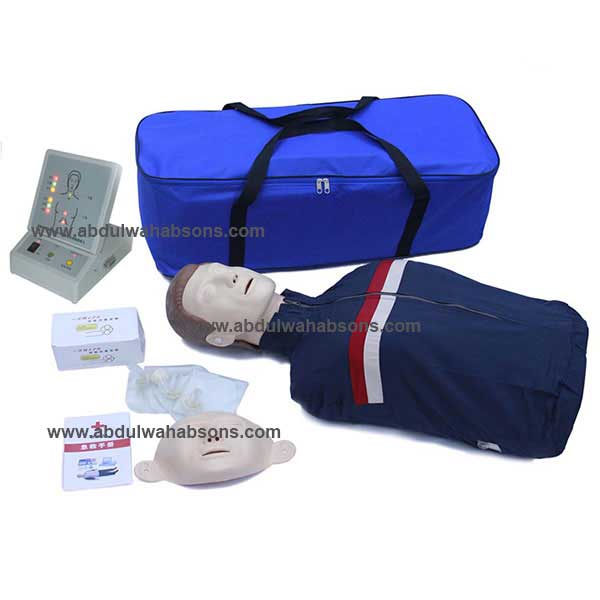
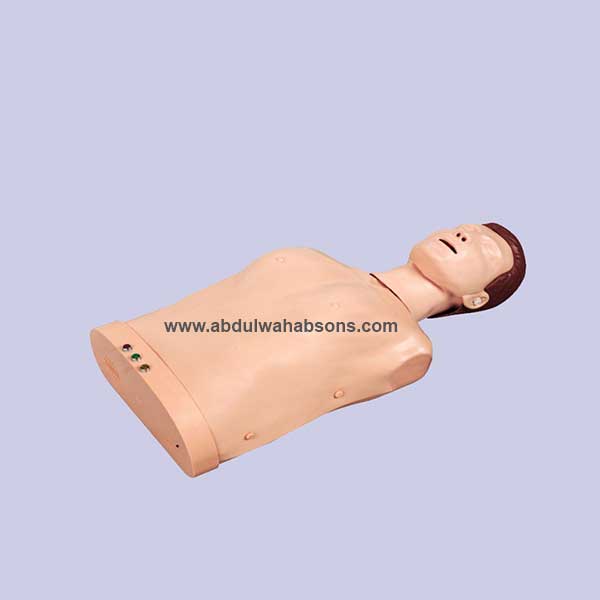
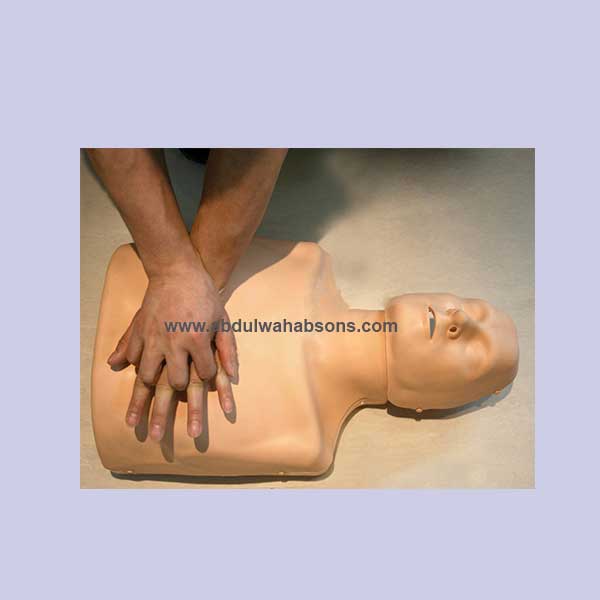
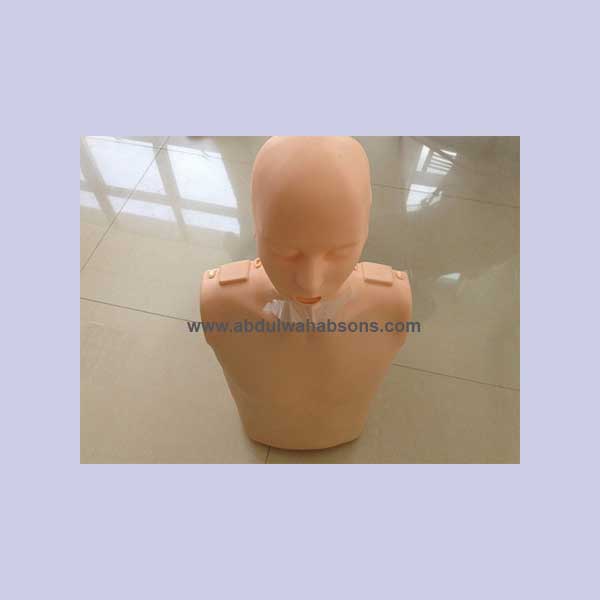
Three economical CPR manikins are constructed of soft, realistic vinyl plastic over polyurethane foam for a human feel
Features include a large torso for realistic abdominal thrusts, realistic .head lift for opening airway, can easily be manipulated
To realistically simulate airway obstruction or choking situation, and a user-friendly lung/airway design that eliminates cleaning. Includes three mouth/nosepieces and three disposable lung / airway, system.choose either brad (white) or Paul (black) with nylon
Carry bag and kneeling pads .Order with electronic and receive an exterior console box that indicates proper hand position, adequate chest compression, and adequate air volume.
Abdul Wahab & Sons provides advanced scientific and medical education solutions, including VR/AR, holograms, 3D Anatomy Tables, and PowerLab systems. AWS serve hospitals, research labs, medical schools, and universities with precision instruments, skill labs, and immersive learning tools empowering the future of healthcare and science.



Reviews
There are no reviews yet.